



The rapid growth of AI is creating unprecedented demand for memory capacity. As models get larger and workloads become more data-intensive, traditional server architectures are increasingly challenged to scale memory efficiently.
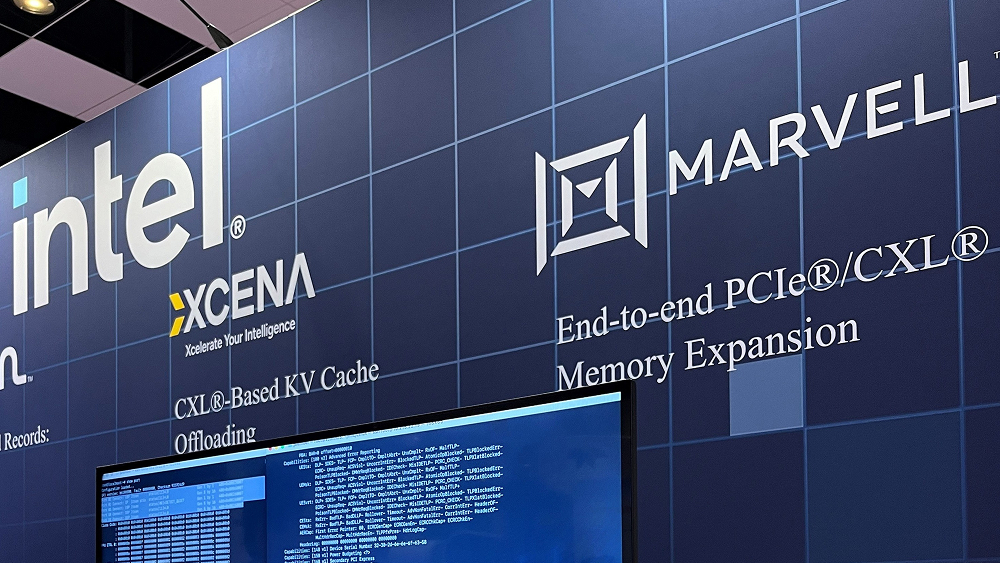
At Flash Memory Summit (FMS), Marvell demonstrated how CXL can enable a more flexible and scalable approach to memory infrastructure, showcasing an end-to-end architecture at the Intel® booth.
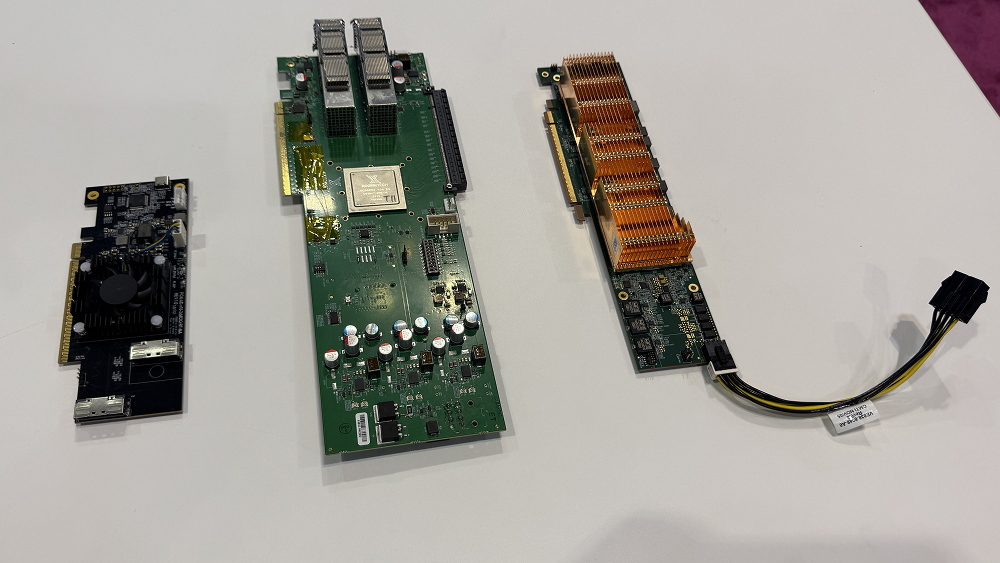
The demonstration combined an Intel platform with three Marvell® technologies: Structera® X CXL memory expander, Structera® S CXL switch and Alaska® P PCIe retimer. Together, they demonstrated how memory expansion, CXL switching and high-speed PCIe connectivity can work together within a real server platform.
Connecting Compute, Connectivity and Expanded Memory
The Intel platform provided the host compute environment for the demonstration, while Marvell technologies extended the architecture beyond traditional CPU-attached memory.
At the center was Marvell Structera X, enabling memory expansion over CXL. By extending memory beyond the processor, Structera X gives system architects greater flexibility to scale memory capacity as AI workloads continue to grow.
Marvell Structera S provided the CXL switching infrastructure, demonstrating how CXL memory resources can be connected through a scalable architecture and supporting more flexible system designs.
Marvell Alaska P provided high-speed PCIe retiming between the Intel platform and the Marvell CXL infrastructure. By helping maintain signal integrity across high-speed PCIe links, Alaska P plays an important role in enabling reliable connectivity within the overall architecture.
A Holistic CXL Memory Infrastructure
The significance of the demonstration goes beyond the individual products. It showed how compute, high-speed connectivity, CXL switching and memory expansion can work together as a complete memory infrastructure solution.
Together, these technologies demonstrate how CXL can help move memory beyond being a fixed resource tightly coupled to the CPU toward a more flexible and scalable system resource.
This becomes increasingly important as AI workloads place greater demands on memory capacity and system scalability. CXL provides a path for system architects to expand memory resources while maintaining the high-speed connectivity required by modern compute platforms.
Building the Next Generation of AI Memory Infrastructure
The FMS demonstration at the Intel booth provided a practical example of how CXL and PCIe technologies designed by Marvell can integrate with a leading server platform to address the evolving requirements of AI infrastructure.
Structera X provides memory expansion, Structera S provides CXL switching and Alaska P provides high-speed PCIe retiming and connectivity. Working together, these technologies demonstrate the company’s holistic approach to building scalable memory infrastructure.
Over in the Marvell booth, the company also unveiled its Photonic Fabric product lineup—memory modules, a NIC, and chiplets. They use optical interconnects to build a shared memory tier spanning multiple racks up to 30 meters apart, offloading up to 32TB of warm KV cache and delivering 2–3x higher token throughput within existing data center power and footprint limits. The platform went on to win the show's AI Infrastructure award, recognizing its approach to the memory bandwidth and data-movement bottlenecks limiting AI inference at scale.
As AI models continue to grow, memory is becoming an increasingly critical part of the overall computing architecture. The ability to expand, connect and scale memory efficiently will be essential to building the next generation of AI systems.
# # #
This blog contains forward-looking statements within the meaning of the federal securities laws that involve risks and uncertainties. Forward-looking statements include, without limitation, any statement that may predict, forecast, indicate or imply future events or achievements. Actual events or results may differ materially from those contemplated in this blog. Forward-looking statements are only predictions and are subject to risks, uncertainties and assumptions that are difficult to predict, including those described in the “Risk Factors” section of our Annual Reports on Form 10-K, Quarterly Reports on Form 10-Q and other documents filed by us from time to time with the SEC. Forward-looking statements speak only as of the date they are made. Readers are cautioned not to put undue reliance on forward-looking statements, and no person assumes any obligation to update or revise any such forward-looking statements, whether as a result of new information, future events or otherwise.
Tags: AI infrastructure, Data Center, Data Processing, server connectivity, Cloud