


By Lance Zheng, Director Product Marketing, IoT Business Unit, Marvell
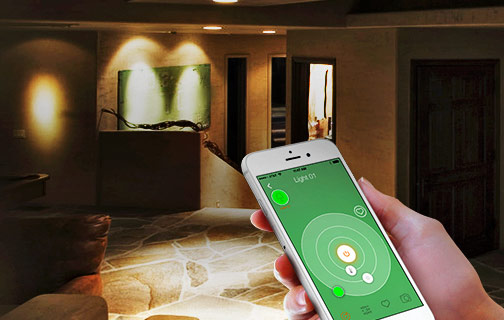 Imagine a house whose lighting anticipates your mood. Not a morning person? No problem. Your lighting will be set to a dimmed setting in the morning and gradually increase brightness over time to wake you naturally, like a sunrise. As your day continues, lights go out in rooms that aren’t used, saving on your energy bill. Starting a movie? Lights go out, automatically. Having a party? Set your theme for outdoors, perhaps orange for Halloween or green and red for Christmas. Coming home from work, your lights will sense the presence of your smart phone down the street, and turn on the outdoor lights to light your way. Indoor lights go on as needed for your safety and convenience. Finishing your day, lights will turn off automatically, no getting up to turn off a light you forgot about. Want to program your lights before vacation to make it look like you are at home? Or turn them off remotely because you can’t remember if you turned off all the lights? All of this can happen when lighting becomes part of the Internet of Things (IoT).
And these ideas are in not the future — they are a reality now. For example:
And what do all these products have in common? Marvell technology. Marvell is in a unique position as the only semiconductor supplier to offer a full end-to-end digital-connected lighting solution platform including LED controller chips, Zigbee microcontrollers, WiFi-ZigBee gateway solution and Kinoma UI software.
Marvell is staying on the leading edge of the technology by offering innovative LED driver technology, best-in-class ZigBee and WiFi microcontrollers and an end-to-end smart wireless platform built on top of these technologies. Marvell has also taken leadership in establishing ecosystem support for these products. Marvell has worked with manufacturing partners and system integrators, who provide software integration services, so that brand-name OEMs and retailers, can bring new and exciting lighting and home automation products to market, based on Marvell technology, more quickly.
Beyond connected lighting, the scalable platform also enables this same embedded technology to include sensors that can detect for example, open or closed windows and doors, motion activities throughout the house, water leakages and more, to give end users a lower cost security system that reports directly to mobile devices. Imagine a sensor technology that could also alert you if there’s a water leak anywhere in the house. (Because when does your hot water usually break? When you are on vacation!) These are just a few examples of how IoT is at work in lighting and home automation to add conveniences to your life - that you never knew you missed.
By Engling Yeo, Director, Embedded Low Power Flash Controller
Lower cost of better reliability?
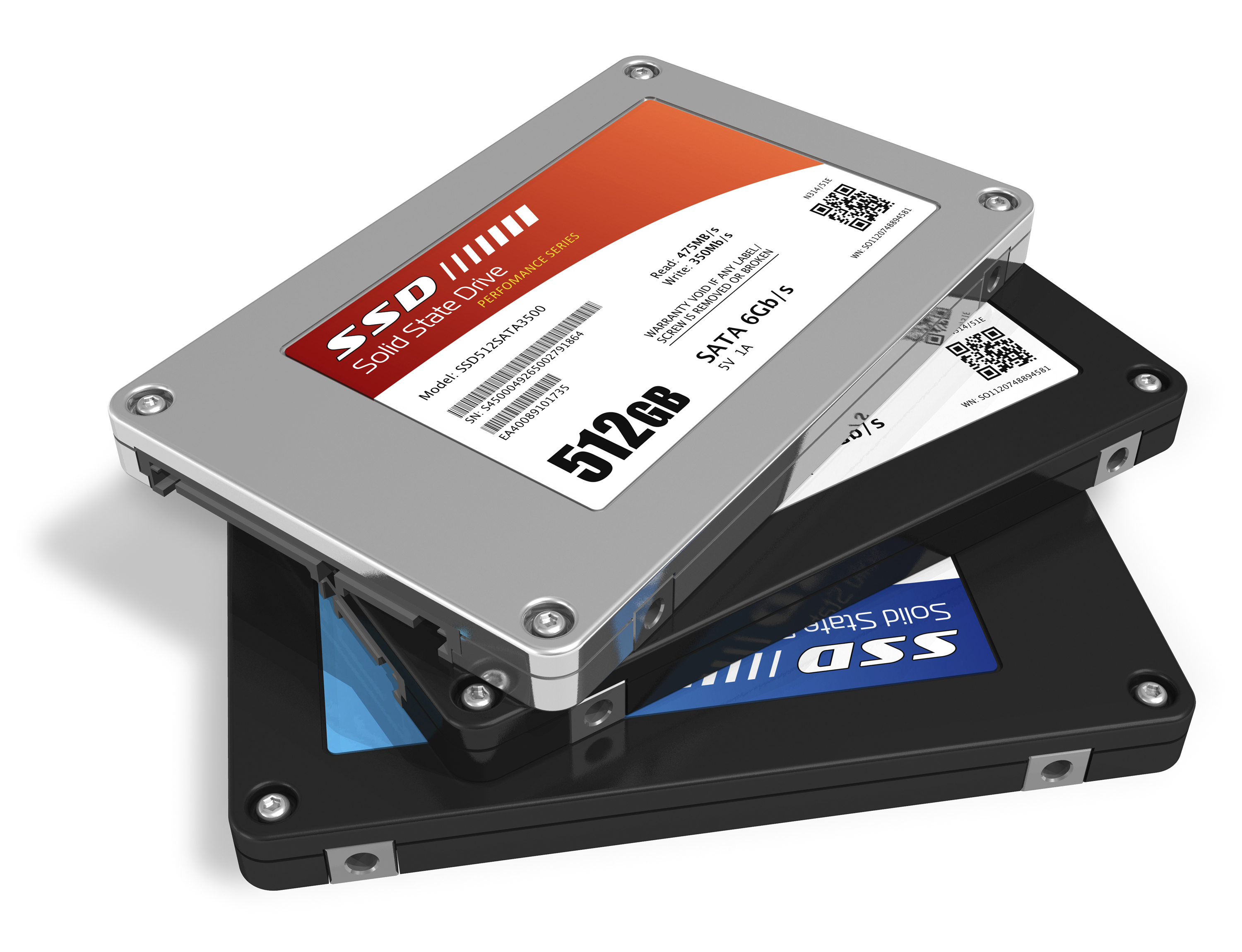
As with most technology innovations, solid-state drives (SSDs) began with high performance, as well as a high price tag. Data centers saw the value, and as technology progressed and OEMs saw the potential for slimmer, lighter form factors (which gave rise to new products like the Apple MacBook Air) SSDs have found their way into mainstream consumer technology. And with mainstream consumer technology, comes a high sensitivity to price. While end users may flinch at a conversation about Error Code Correction (ECC) mechanisms, and say their primary concern is price, these same users would go crazy if their low-priced SSD loses their data! And thus, we engineers have to be concerned about things like ECC mechanisms – and we enjoy those conversations.
So let the discussions begin. As stated, consumer markets with embedded storage using solid-state, or NAND-flash devices, are especially cost sensitive. Much of what we do can be collectively known as “signal processing” to mitigate the issues that affect the bottom line of consumer storage products. The basic building block of any solid-state storage product is a floating-gate transistor cell. The floating gate can store discrete levels of electron charges. These levels translate into one or more stored binary bits. NAND-flash manufacturers generally adopt two methods to increase the density of storage 1) physically squeeze as many floating-gate devices as close together as possible, and 2) use each storage element to store as many bits as possible (current state-of-the-art technology stores 3 bits per floating-gate transistor). However, both directives tend to increase the error probability of the bits during retrieval. Marvell’s challenge was to create an enhanced ECC technology, that when used on efficient hardware architectures, would achieve the same data integrity with high-density NAND-flash that would otherwise tend to have a higher raw bit-error rate.
Adding to the complexity, each floating-gate transistor has a limited number of program-erase (P/E) cycles beyond which probability of error increases above a threshold that renders the transistor useless and unrepairable. This limitation is due to the erase procedure, which subjects the devices to doses of high voltages that cause physical deterioration of the transistors. As the number of P/E cycles increases, the probability of error also increases. A good error-correction strategy can mitigate these effects, and therefore extend the lifetime of the devices.
Marvell is currently in the midst of a development cycle for the third generation of Low Density Parity Check codes for solid-state storage applications. Our goal is to provide effective ECC management and strategies that allow the customer to lower the cost-per-unit storage, without sacrificing reliability. And that’s something to talk about!