


By Patrizia Mastromatteo, Senior Staff Engineer, Marvell
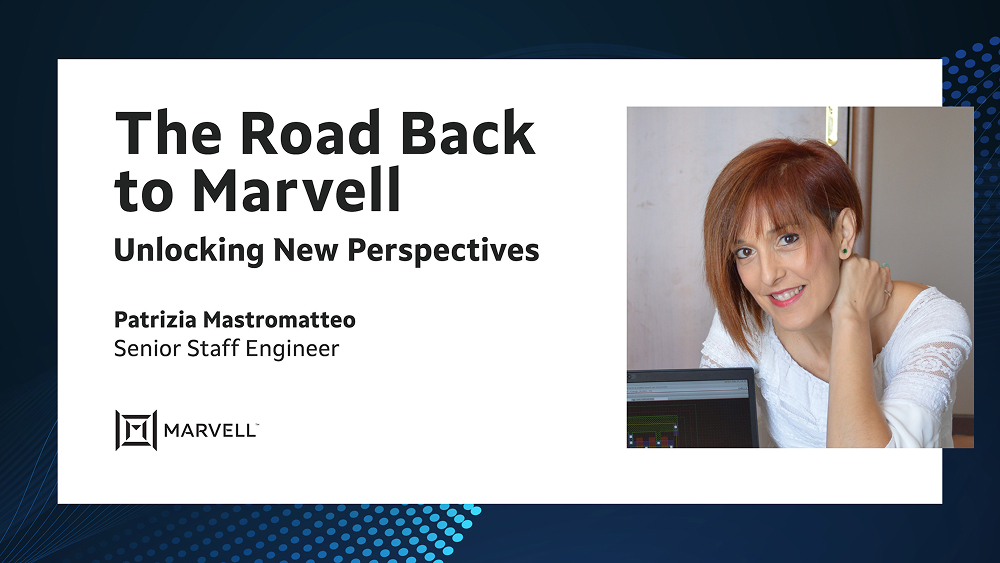
As both a pastry chef and a Senior Layout Engineer, I’ve realized my profession and my passion have a lot more in common than you might think. Both require following a highly rigorous, regulated process with multiple, precise steps. In both worlds, when you find a recipe or a methodology that works perfectly, your natural instinct is to repeat it.
So, when it came to my career, I decided to do exactly that.
The other shared ingredient between baking and layout engineering might surprise you: creativity and imagination. While that’s obvious for baking—where measurements are rigid but flavor profiles require thinking outside the box—it is just as true for layout design. Of course, parts of the engineering process are strictly defined by performance specifications and power constraints. But the rest? It’s all about imagination. It's about visualizing the right layout, solving the puzzle and conceptualizing how components will work best together.
By Arifur Rahman, Director of Product Marketing, Custom Cloud Solutions, Marvell
AI and ML workloads are rewriting the rules of data center design. Memory demands are reaching an unprecedented level due to growing LLM sizes, expanding context windows and growing KV-cache requirements. Traditional servers are not architected to meet this surge. Memory has become the primary bottleneck constraining AI performance and infrastructure efficiency. CXL-based memory expansion has emerged as one of the definitive architectural answers, and Marvell is raising the bar.
Building on the strong market adoption of the first-generation Structera® X CXL controllers, the second-generation Structera X 3406 and Structera X 3506, co-developed and co-architected with leading hyperscalers, address the most demanding AI infrastructure requirements.
Modern AI inference workloads, from LLM serving to deep learning recommendation models (DLRM), are memory bound. KV-cache capacity determines time-to-first-token (TTFT), throughput and XPU utilization. When memory runs out, performance collapses.
By Rajagopal Krishnaswamy, Associate Vice President, Product Marketing, Marvell
The networking industry has fully embraced the benefits of open networking. Organizations building cloud infrastructure, AI clusters, enterprise data centers and edge networks want the flexibility to choose the hardware and software solutions that best meet their requirements. Software for Open Networking in the Cloud (SONiC) has emerged as a powerful foundation for achieving that flexibility, enabling customers to adopt an open, community-driven network operating system across diverse environments.
But deploying SONiC in production requires more than installing software on a switch.
As networks grow in scale and complexity, organizations need validated software, operational visibility, lifecycle management, automation, and enterprise-grade support. Running modern infrastructure successfully requires a complete operational framework that helps teams deploy, manage, troubleshoot and evolve their networks over time.
That reality is driving the next phase of SONiC adoption.
By Vienna Alexander, Marketing Content Professional, Marvell
Marvell was named as one of the Best Workplaces in Engineering for 2026, recognizing the company’s success in building an exceptional workplace culture.
Marvell ranks 16th out of the 100 engineering workplaces recognized. The list is based on data from global people analytics firm Great Place to Work®, who analyzed survey feedback from 14,000 U.S. employees in the industry. Marvell was recently named as a Great Place to Work, with both awards reaffirming how the company has cultivated a collaborative and supportive environment.
In the surveys, employees shared that they receive respect and support in development with opportunities to contribute and grow, gaining appreciation for their work from their teams. Additional measures include employees being proud of their work, team, and company, and feeling they make a difference through meaningful work. The very feedback that employees reported made Marvell one of the top organizations to work for in engineering, accomplished by offering one of the most caring and innovative cultures that reflects a genuine commitment to meet the diversity of employees’ needs.
By Vienna Alexander, Marketing Content Professional, Marvell
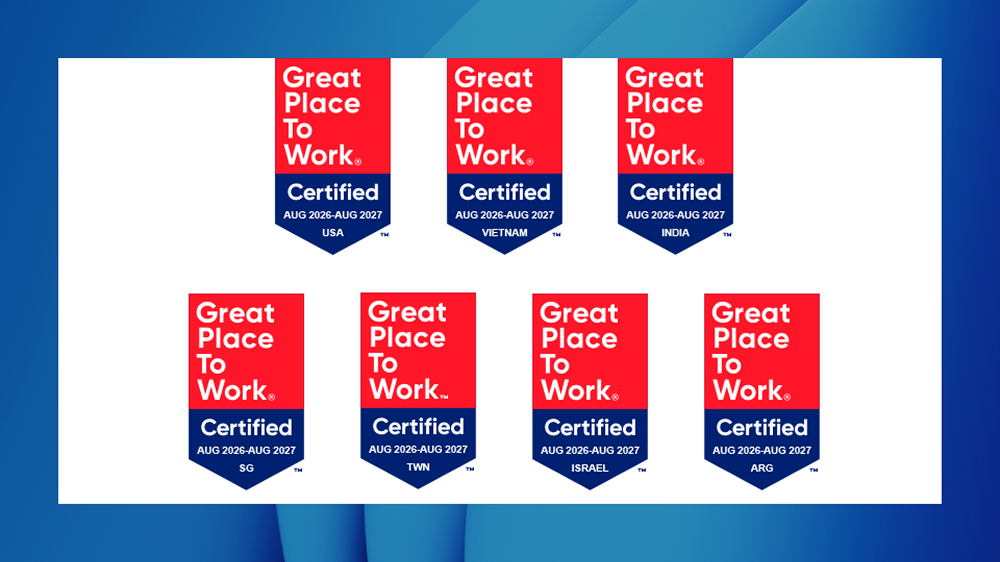
Marvell has been recognized once again as a Great Place to Work®. This year, Marvell received this honor in a total of seven countries; this is the fourth year in a row for the United States, the third year for India and Vietnam, and the first year for Singapore, Taiwan, Argentina and Israel.
The Great Place to Work certification recognizes employers that create outstanding employee experiences. Employee surveys provide feedback and data about the experience at their organization, helping job seekers identify companies with a strong workplace culture and providing employers with research-backed validation of their employee experience to build trust.
At Marvell, 89% of U.S. employees say it is a great place to work, compared to 57% of employees at a typical American company. Marvell isn’t your typical company, and the culture reflects that. Innovation and collaboration are in the company’s DNA. Over 90% of employees highlighted pride in their work, fairness, strong relationships with colleagues and trust in leadership as key strengths of the company culture.