



By Arifur Rahman, Director of Product Marketing, Custom Cloud Solutions, Marvell
AI and ML workloads are rewriting the rules of data center design. Memory demands are reaching an unprecedented level due to growing LLM sizes, expanding context windows and growing KV-cache requirements. Traditional servers are not architected to meet this surge. Memory has become the primary bottleneck constraining AI performance and infrastructure efficiency. CXL-based memory expansion has emerged as one of the definitive architectural answers, and Marvell is raising the bar.
Building on the strong market adoption of the first-generation Structera® X CXL controllers, the second-generation Structera X 3406 and Structera X 3506, co-developed and co-architected with leading hyperscalers, address the most demanding AI infrastructure requirements.
Modern AI inference workloads, from LLM serving to deep learning recommendation models (DLRM), are memory bound. KV-cache capacity determines time-to-first-token (TTFT), throughput and XPU utilization. When memory runs out, performance collapses.
By Vienna Alexander, Marketing Content Professional, Marvell
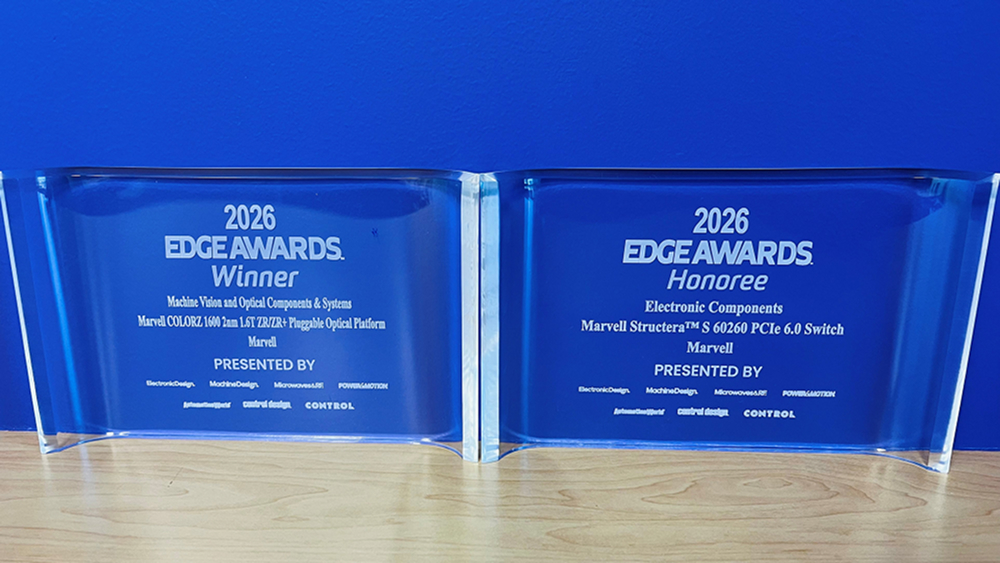
In the 2026 EDGE awards, the Marvell® COLORZ® 1600 2nm 1.6T ZR/ZR+ pluggable optical platform won the Machine Vision and Optical Components & Systems category.
Electronic Design presented this year’s winners and honorees to celebrate recent design and engineering feats that excel in the industry. These innovations are pushing the bounds and represent the leading “EDGE” of technology.
Marvell COLORZ 1600 is the industry’s first 1.6T ZR/ZR+ data center interconnect (DCI) pluggable. Powered by Marvell Electra, the industry’s first 2nm 1.6T ZR/ZR+ coherent DSP, the device delivers efficient, high-performance and secure optical transmission for hyperscale AI and cloud networks globally. The pluggable is purpose-built for long-distance links; COLORZ 1600 connects campus (20km), metro (120km) and regional (1,000km) data centers at 1.6T.
By Abed Mohammad Kamaluddin, Director, Custom Cloud Solutions, Marvell, and Vienna Alexander, Marketing Content Professional, Marvell
For most of the last decade, scaling AI meant scaling compute. If you built faster accelerators and wired enough of them together, the models would follow.
That is no longer the whole picture. Models now run to hundreds of billions of parameters with extensive context windows, and whether an expensive accelerator is working or just waiting comes down to memory: how much you have, how fast you can reach it, and how much time you lose moving data around.
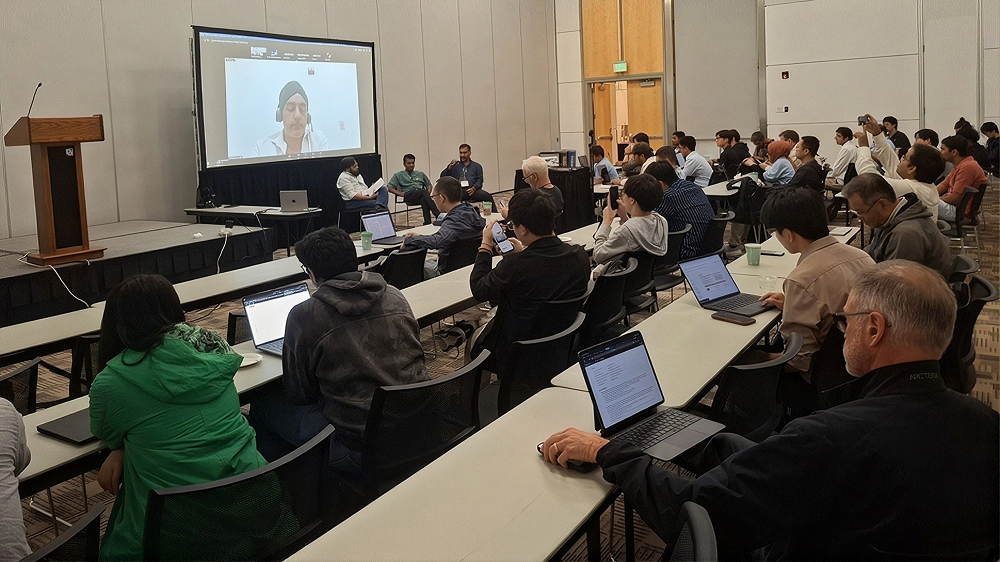
Once memory leaves the server and rides a switched fabric, is it still memory, or has it become a network? This was the central question of MemNetAI, the first workshop on Memory-Semantic Networking for AI-Scale Systems, launched by Marvell with researchers from IIT Hyderabad and IIIT Delhi. Held at ACM SIGCOMM 2026 in Denver and guided by a program committee spanning academia and industry, it brought speakers from Cornell, alongside industry experts and researchers presenting their work, to debate these questions on the bleeding edge of AI infrastructure.
By Khurram Malik, Associate Vice President, Custom Cloud Solutions, Marvell
The rapid growth of AI is creating unprecedented demand for memory capacity. As models get larger and workloads become more data-intensive, traditional server architectures are increasingly challenged to scale memory efficiently.
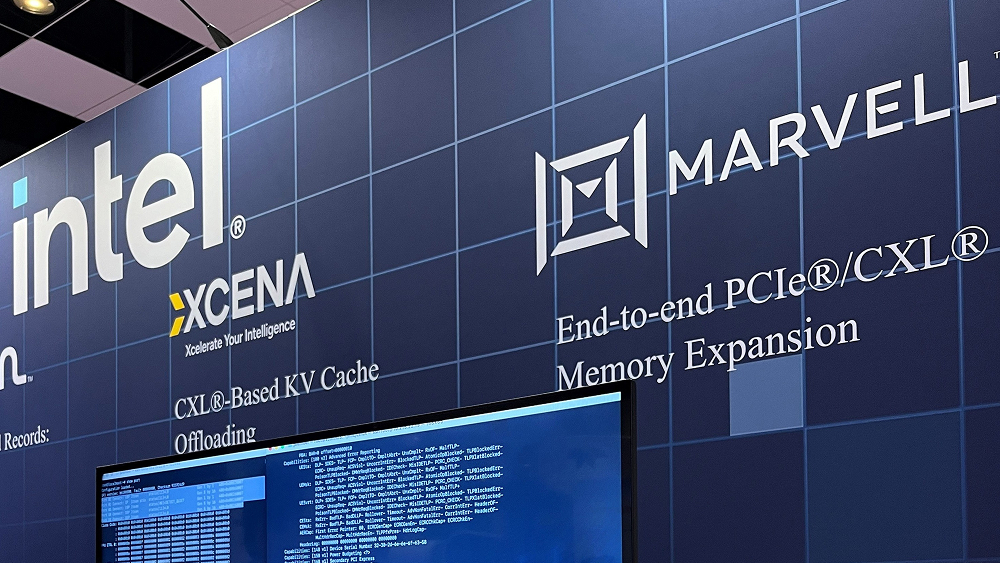
At Flash Memory Summit (FMS), Marvell demonstrated how CXL can enable a more flexible and scalable approach to memory infrastructure, showcasing an end-to-end architecture at the Intel® booth.
The demonstration combined an Intel platform with three Marvell® technologies: Structera® X CXL memory expander, Structera® S CXL switch and Alaska® P PCIe retimer. Together, they demonstrated how memory expansion, CXL switching and high-speed PCIe connectivity can work together within a real server platform.
By Arifur Rahman, Director of Product Marketing, Custom Cloud Solutions, Marvell
Memory has become the defining constraint of modern AI infrastructure. Large language models, in-memory databases, and deep learning recommendation models all share the same bottleneck: there is never enough DRAM. Compute Express Link (CXL) was designed to break that bottleneck but a CXL memory expander is only as valuable as the breadth of platforms it can run on.
That is why ecosystem enablement is a core pillar of Marvell's CXL strategy. Today we are marking a new milestone: successful interoperability of the Marvell® Structera™ X CXL memory-expansion controller with the NVIDIA Vera CPU platform.