


By Vienna Alexander, Marketing Content Professional, Marvell
Marvell was named as one of the Best Workplaces in Engineering for 2026, recognizing the company’s success in building an exceptional workplace culture.
Marvell ranks 16th out of the 100 engineering workplaces recognized. The list is based on data from global people analytics firm Great Place to Work®, who analyzed survey feedback from 14,000 U.S. employees in the industry. Marvell was recently named as a Great Place to Work, with both awards reaffirming how the company has cultivated a collaborative and supportive environment.
In the surveys, employees shared that they receive respect and support in development with opportunities to contribute and grow, gaining appreciation for their work from their teams. Additional measures include employees being proud of their work, team, and company, and feeling they make a difference through meaningful work. The very feedback that employees reported made Marvell one of the top organizations to work for in engineering, accomplished by offering one of the most caring and innovative cultures that reflects a genuine commitment to meet the diversity of employees’ needs.
By Vienna Alexander, Marketing Content Professional, Marvell
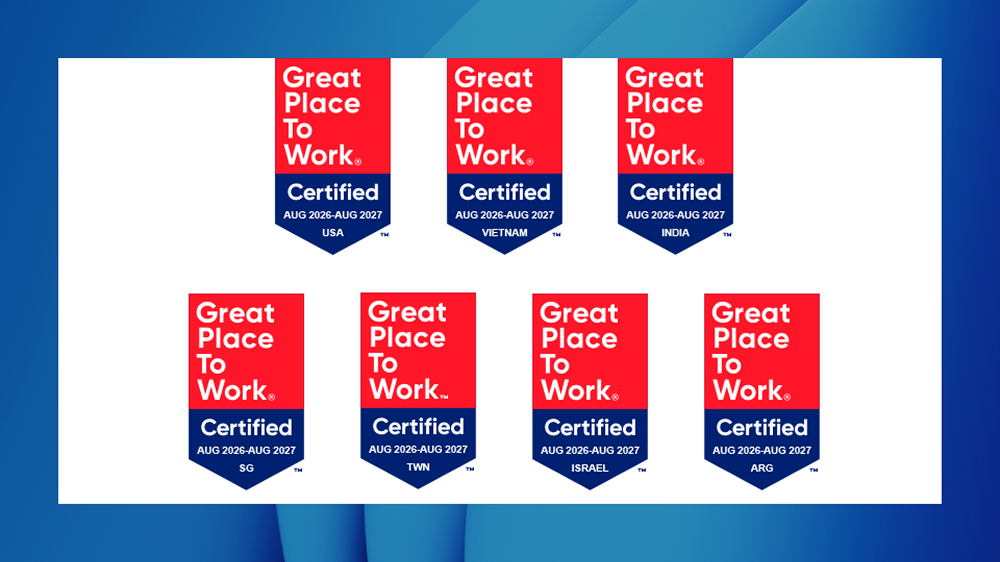
Marvell has been recognized once again as a Great Place to Work®. This year, Marvell received this honor in a total of seven countries; this is the fourth year in a row for the United States, the third year for India and Vietnam, and the first year for Singapore, Taiwan, Argentina and Israel.
The Great Place to Work certification recognizes employers that create outstanding employee experiences. Employee surveys provide feedback and data about the experience at their organization, helping job seekers identify companies with a strong workplace culture and providing employers with research-backed validation of their employee experience to build trust.
At Marvell, 89% of U.S. employees say it is a great place to work, compared to 57% of employees at a typical American company. Marvell isn’t your typical company, and the culture reflects that. Innovation and collaboration are in the company’s DNA. Over 90% of employees highlighted pride in their work, fairness, strong relationships with colleagues and trust in leadership as key strengths of the company culture.
By Vienna Alexander, Marketing Content Professional, Marvell
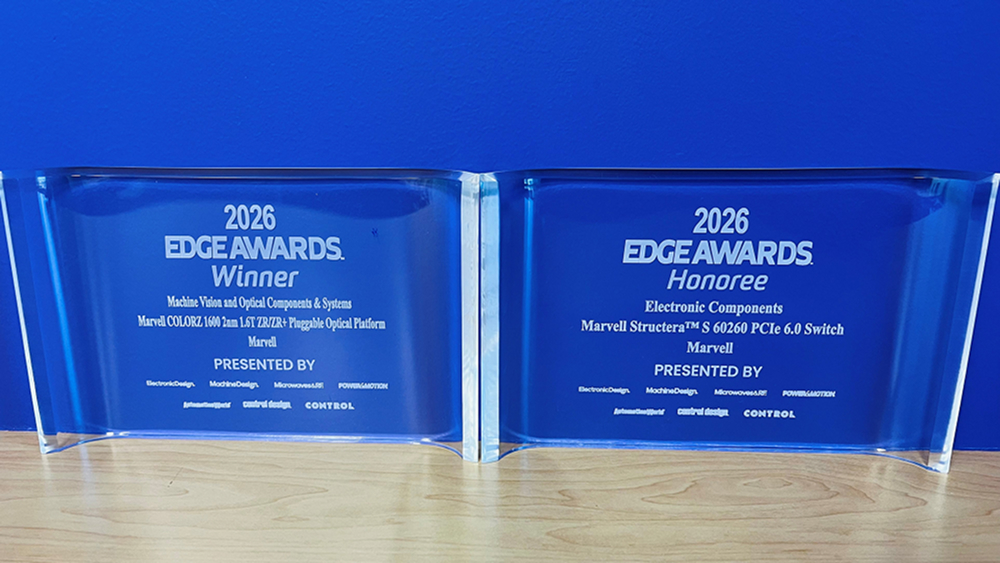
In the 2026 EDGE awards, the Marvell® COLORZ® 1600 2nm 1.6T ZR/ZR+ pluggable optical platform won the Machine Vision and Optical Components & Systems category.
Electronic Design presented this year’s winners and honorees to celebrate recent design and engineering feats that excel in the industry. These innovations are pushing the bounds and represent the leading “EDGE” of technology.
Marvell COLORZ 1600 is the industry’s first 1.6T ZR/ZR+ data center interconnect (DCI) pluggable. Powered by Marvell Electra, the industry’s first 2nm 1.6T ZR/ZR+ coherent DSP, the device delivers efficient, high-performance and secure optical transmission for hyperscale AI and cloud networks globally. The pluggable is purpose-built for long-distance links; COLORZ 1600 connects campus (20km), metro (120km) and regional (1,000km) data centers at 1.6T.
By Abed Mohammad Kamaluddin, Director, Custom Cloud Solutions, Marvell, and Vienna Alexander, Marketing Content Professional, Marvell
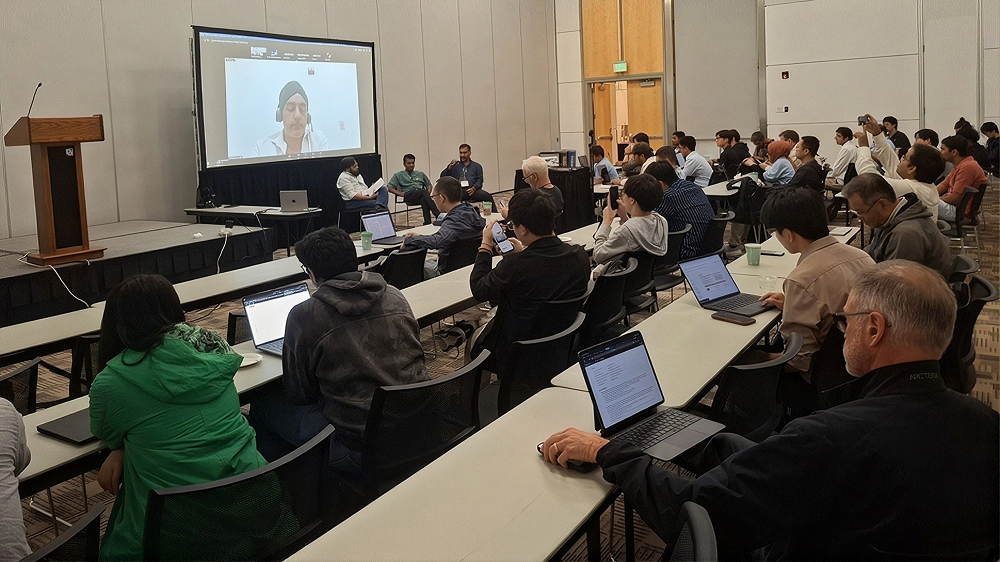
For most of the last decade, scaling AI meant scaling compute. If you built faster accelerators and wired enough of them together, the models would follow.
That is no longer the whole picture. Models now run to hundreds of billions of parameters with extensive context windows, and whether an expensive accelerator is working or just waiting comes down to memory: how much you have, how fast you can reach it, and how much time you lose moving data around.
Once memory leaves the server and rides a switched fabric, is it still memory, or has it become a network? This was the central question of MemNetAI, the first workshop on Memory-Semantic Networking for AI-Scale Systems, launched by Marvell with researchers from IIT Hyderabad and IIIT Delhi. Held at ACM SIGCOMM 2026 in Denver and guided by a program committee spanning academia and industry, it brought speakers from Cornell, alongside industry experts and researchers presenting their work, to debate these questions on the bleeding edge of AI infrastructure.
By Eyal Worthalter, Director, Security Sales, Marvell
For more than a decade, the cloud has been rewriting the rules of cryptographic security. Signing, certificate management, tokenization and encryption key management have all found their way from on-premises hardware security modules (HSMs) into fully managed cloud services. But one corner of the HSM world has stubbornly resisted that shift: payments.
Until now, there has been no true cloud HSM for payments. That is changing with Azure Cloud HSM v2, a new offering built jointly by Marvell, Microsoft and Utimaco, entering public preview in September 2026.
To understand why this matters, it helps to look back at where payment security came from, and why it took a different path than the rest of the cryptography world.
Where It All Started: The Atalla Box
This is the payments chapter of a much broader evolution in Azure key management. Azure began by making HSM backed key protection available as a shared cloud service, expanded to dedicated HSM appliances for customers requiring exclusive hardware control, and then evolved toward cloud-native, single-tenant HSM services that deliver tenant isolation, customer control, and cloud-scale operations without requiring customers to manage the underlying hardware. Azure Payment HSM v2 extends that evolution to the highly specialized world of payment cryptography.